Receipt and invoice retention practices in the UK and US
Country-aware practical habits for keeping receipts searchable, backed up, and audit-ready.
4 min read · Updated
In short
Retention periods depend on the country and the business: UK businesses commonly keep records for several years, and in the US IRS and state rules apply, so confirm the period with an accountant. Keep documents readable, searchable, linked to the payment and backed up in two places.
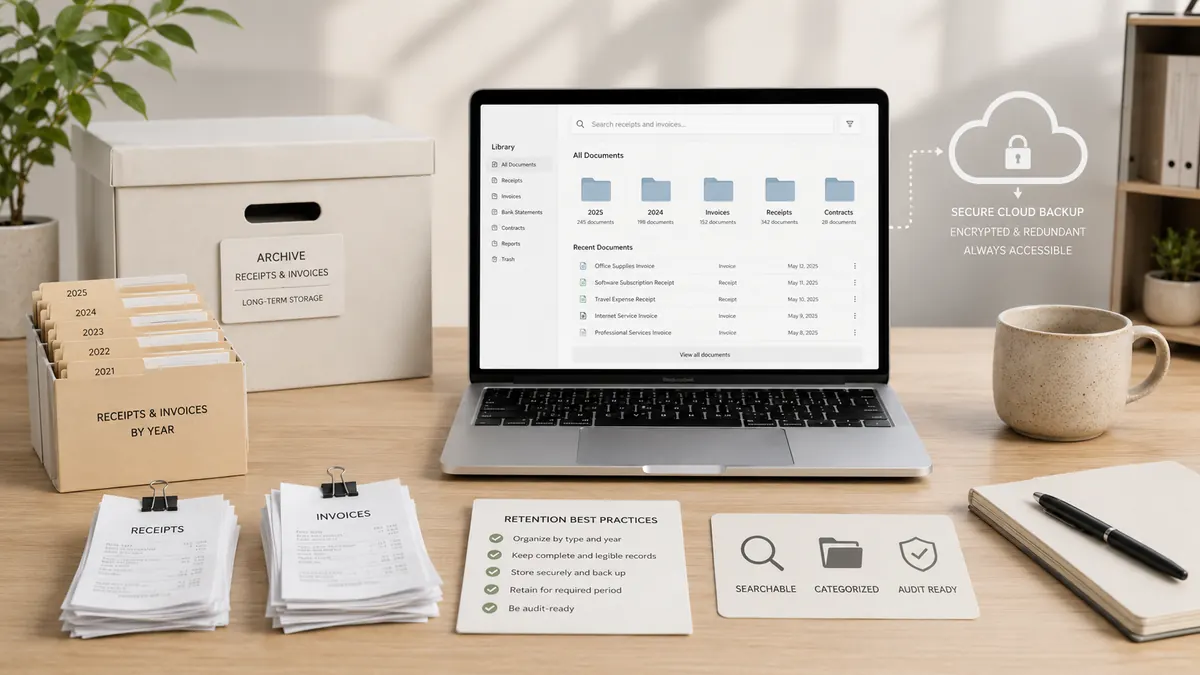
Retention rules differ by country and business structure. In the UK, businesses commonly keep accounting records for several years, and VAT records have their own requirements. In the US, IRS guidance and state rules can affect how long records should be retained. Confirm the exact period with your accountant.
The practical goal is the same in both places: keep documents readable, searchable, and connected to the transaction they support. Store the image or PDF, the spreadsheet row, and any payment evidence in a consistent structure.
Use folders by tax year or calendar year, depending on how your business reports. Include the vendor and date in the file name. If you work across states or countries, include location or tax jurisdiction when relevant.
Connect payment records to the document too. Linking a card statement, bank movement, or payment slip to the receipt strengthens your review. To make that matching easier, ExpenSheet writes the last 4 digits of the card as its own column next to the payment method whenever the receipt or POS slip shows them, so you can find the statement line by the card it was paid with. The full card number is never read, stored, or exported.
Backups matter. A receipt archive should not live only on one laptop or one phone. Use a secure cloud folder, local backup, or both. Limit access to people who need it, because receipts may contain names, card fragments, addresses, or other personal data.
Finally, test the archive. Pick a random spreadsheet row and see whether you can open the original receipt within a minute. If not, the system needs simplifying.